What is Equine Talent’s verification status?
Identity checks are planned for Equine Talent. The site has not launched a verification service, published a badge standard, or verified the sample listings. Until an operating process and its scope are explained, do not assume that a profile or example ad has passed a check.
Check five different kinds of evidence
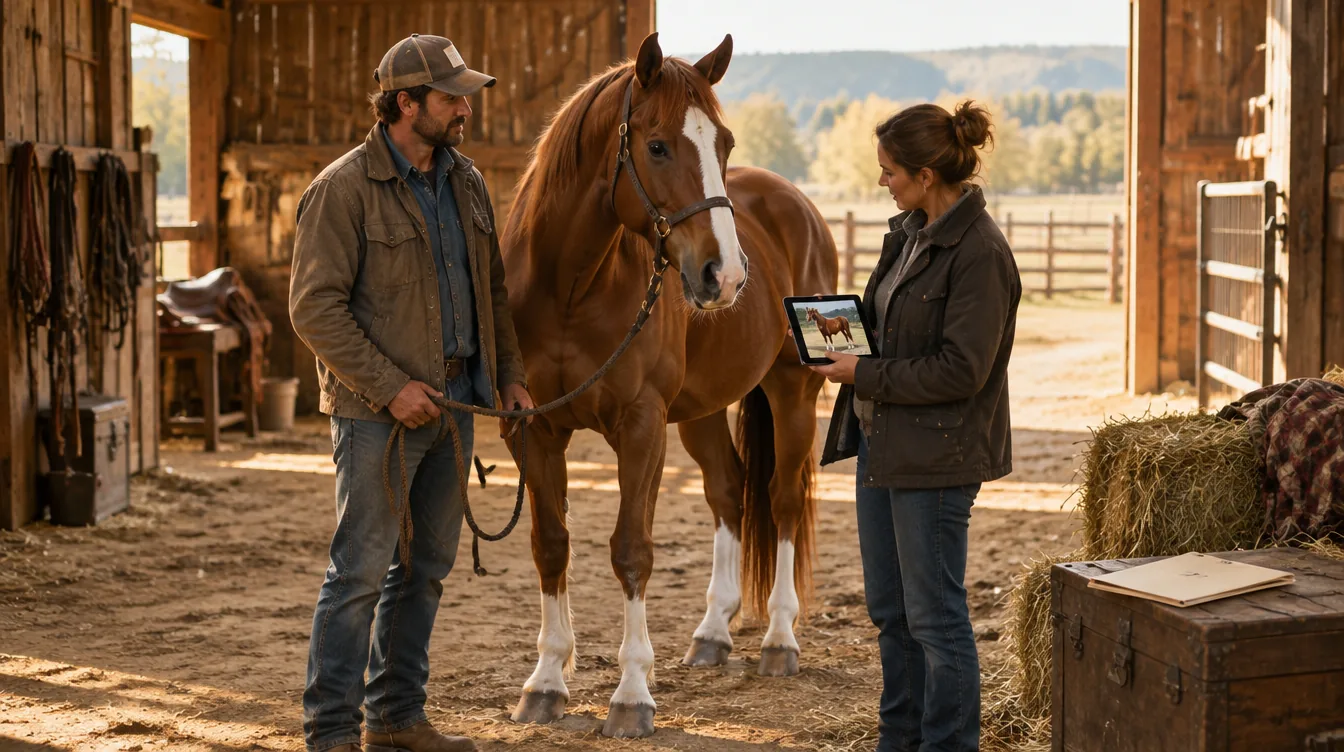
AQHA advises matching the horse’s markings to its certificate and checking the owner of record or the seller’s authority to sign. Contact the registry if the information does not line up.
- Seller identity: establish who you are speaking with and how to reach them independently.
- Authority to sell: establish whether the person is the owner or an authorized agent.
- Horse identity: compare the horse in current media with its registered name, number, and identifying details.
- Performance: ask for the event, class, year, rider, and relevant association record.
- Present condition and rider fit: involve your veterinarian and trainer; neither follows automatically from an identity check.
Check the source: AQHA: transferring an American Quarter Horse · AQHA: records and pedigrees
What cannot a badge tell you?
Knowing who a seller is does not by itself establish ownership, health, riding suitability, future performance, or price. A recent video and a show record answer different questions from a purchase examination. AAEP places the scope of that examination with the veterinarian and the suitability decision with the buyer.
Check the source: AAEP: reporting purchase examinations
When should you ask for more?
Pause when names conflict, the horse cannot be identified consistently, a person cannot explain their authority to sell, or current information is repeatedly unavailable. Resolve the specific uncertainty with the owner, registry, trainer, or veterinarian before proceeding. Keep personal identity documents out of public advertisements.
The experience behind our perspective
Joanne’s account of Junior describes how a horse that did not suit one rider became her own partner with Mavis’s instruction. For Equine Talent, a documented identity and an appropriate horse-and-rider match are separate questions.
Read about Junior and rider fitPublished by Equine Talent. Personal experiences are attributed to Joanne’s story; source links support the specific guidance above. Discuss veterinary findings and individual purchase decisions with your own qualified professionals.